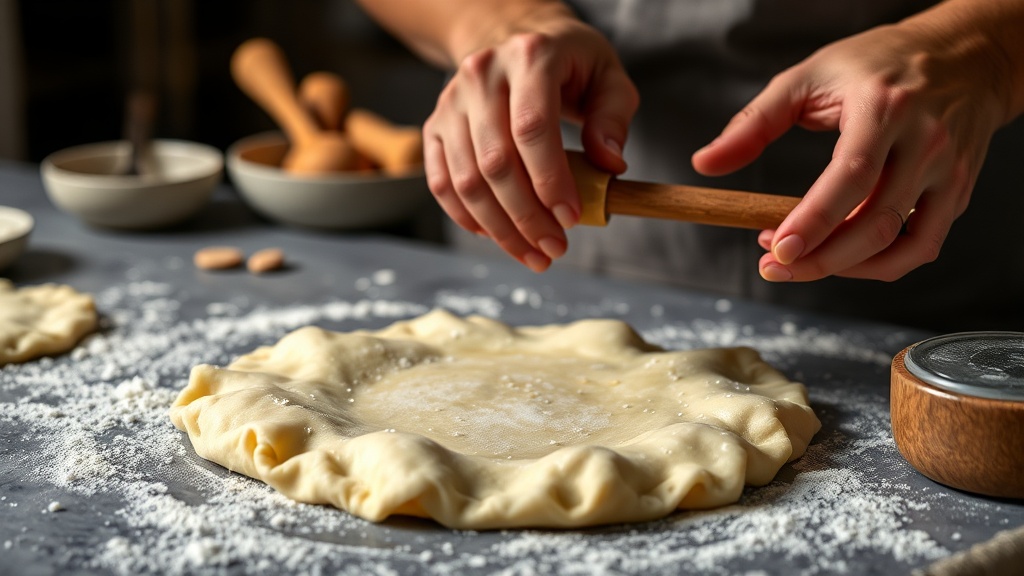
Making Flaky Plant Based Puff Pastry from Scratch

Most store-bought vegan puff pastry is either a soggy mess or relies on cheap, highly processed oils that leave a greasy film on your palate. Making your own plant-based puff pastry at home allows you to control the fat quality and achieve those distinct, paper-thin layers that define a great pastry. This guide covers the science of lamination using plant-based fats, the specific tools you'll need, and the step-by-step process of folding dough to create hundreds of layers.
The secret to puff pastry isn't just the ingredients; it's the temperature of the fat. If your fat melts before it hits the oven, you lose the layers. You're looking for a solid, pliable fat that can be rolled into sheets, not a liquid oil.
What Kind of Fat Works Best for Vegan Puff Pastry?
High-quality vegan butter or a solid vegetable shortening works best for creating distinct layers. While many people reach for liquid coconut oil, it often lacks the structural integrity needed for the lamination process unless you use a highly saturated version. I recommend using a brand like Miyoko's Creamy Plant Milk Butter or a high-quality European-style vegan butter stick, as these have a higher fat content and lower water content.
If you want a more neutral flavor, a professional-grade vegetable shortening like Crisco is a reliable option. It's stable and stays solid at room temperature, which is a huge advantage when you're doing multiple folds. (Just don't expect the flavor depth you'd get from a cultured vegan butter).
Here is a quick breakdown of how different fats behave during the baking process:
| Fat Type | Lamination Ability | Flavor Profile | Best Use Case |
|---|---|---|---|
| Vegan Butter Sticks | Good | Rich/Creamy | Savory turnovers or sweet pastries |
| Vegetable Shortening | Excellent | Neutral | |
| Coconut Oil (Solid) | Moderate | Coconutty | Desserts and tropical-themed bakes |
How Do You Make Layers with Plant-Based Dough?
Lamination is the process of folding fat into dough repeatedly to create alternating layers of flour and fat. This is the same technique used in traditional French pastry, but substituting dairy butter with a solid plant-based fat. You aren't just mixing ingredients; you're building a structure.
The Ingredients You'll Need
- All-Purpose Flour: 500g (Use a flour with a medium protein content to ensure the dough can hold the weight of the fat).
- Cold Water: 250ml (Must be ice-cold).
- Salt: 10g (Fine sea salt works best).
- Vegan Butter/Shortening: 400g (Keep this very cold).
- Apple Cider Vinegar: 1 tablespoon (This helps relax the gluten).
The Step-by-Step Process
1. Prepare the Dough (The "Détrempe"): Mix your flour, salt, water, and vinegar in a large bowl. Mix until a rough dough forms. It shouldn't be perfectly smooth yet—you want some texture. Wrap this in plastic and let it rest in the fridge for at least 30 minutes. This resting period is vital to relax the gluten so the dough doesn't snap back when you roll it out.
2. Prepare the Fat (The "Beurrage"): Take your cold vegan butter or shortening and place it between two sheets of parchment paper. Use a rolling pin to flatten it into a square about 1/2 inch thick. This is your "fat block." It needs to be the same consistency as your dough—pliable but not melting.
3. The Enclosure: Roll your dough out into a larger square than your fat block. Place the fat block in the center of the dough. Fold the edges of the dough over the fat, sealing it completely. You should have a neat little package of dough with the fat hidden inside. This is where the magic starts.
4. The Folds (The "Turns"): This is the part that requires patience. You'll perform a series of "turns" to create the layers. A standard turn involves rolling the dough into a long rectangle and folding it like a letter (top third down, bottom third up).
- Roll the dough out into a long rectangle.
- Fold the top third toward the center.
- Fold the bottom third over the top.
- Rotate the dough 90 degrees.
- Repeat the rolling and folding process.
After every two folds, you must put the dough in the fridge for at least 20 minutes. If the dough gets too warm, the fat will leak out and you'll end up with a greasy pancake instead of a flaky pastry. I can't stress this enough—if you feel the dough getting soft, stop and chill it.
Why Does My Pastry Not Puff Up?
If your pastry is flat or heavy, it's usually due to one of three things: temperature, moisture, or your folding technique. If the fat melts into the flour during the process, the steam cannot lift the layers apart during baking. Steam is what actually creates the "puff."
Check your oven temperature. If your oven isn't hot enough when the pastry goes in, the steam won't be forceful enough to lift the layers. You want a high heat—usually around 400°F (200°C)—to shock the dough into rising. Also, ensure your water and fat are truly cold. If you're using a recipe from a source like the Wikipedia entry on Puff Pastry, you'll see that the physics of steam is the entire foundation of the bake.
Another common mistake is over-handling the dough. Every time you touch it, you're adding heat from your hands. Use a bench scraper to move the dough around rather than your fingers. This keeps the temperature stable.
If you've ever struggled with savory fillings being too wet, you might want to look into ways to add depth to your plant-based cooking, but for the pastry itself, keep the moisture low. A wet filling will steam the bottom of your pastry from the inside, making it soggy.
When you're working with a dough this technical, don't be afraid to pair it with rich, creamy elements. If you've mastered the pastry, try using it with a homemade filling. For example, a savory mushroom filling pairs beautifully with a rich, homemade nut-based cheese. If you're interested in making your own fillings, check out my guide on making creamy cashew ricotta to add a high-end touch to your savory tarts.
The most important thing to remember is that lamination is a game of patience. You can't rush the chilling steps. If you try to skip a rest period, you'll see the dough fight you. It's a physical battle between the gluten and the fat. If the gluten is too strong, it will prevent the layers from expanding. If the fat is too warm, it will disappear. Master this balance, and you'll have a pastry that rivals any traditional bakery in Vancouver.
Steps
- 1
Prepare the Vegan Fat Block
- 2
Incorporate the Flour and Water
- 3
The Folding and Lamination Process
- 4
Chilling and Resting the Dough