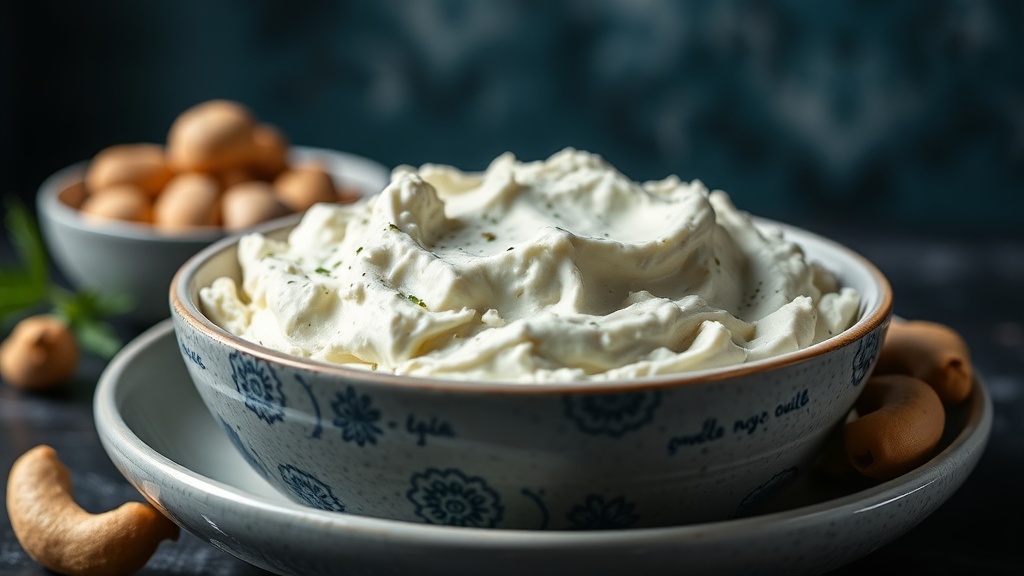
Making Your Own Creamy Cashew Ricotta at Home

Did you know that cashews contain roughly 16 grams of fat per ounce, making them one of the most effective bases for mimicking the high-fat mouthfeel of traditional dairy? This guide covers how to transform raw cashews into a velvety, creamy ricotta substitute using just a few pantry staples. Mastering this technique is vital because store-bought vegan cheeses often rely on starches or gums that can leave a chalky aftertaste. By making your own, you control the texture, the acidity, and the quality of the fats used.
What Ingredients Do You Need for Vegan Ricotta?
You need raw cashews, water, nutritional yeast, lemon juice, and sea salt to create a convincing ricotta texture.
The quality of your nuts matters more than you might think. I always suggest using organic, raw cashews from brands like Cashew Nation or any high-quality bulk supplier. Avoid roasted or salted nuts; if you use roasted cashews, your "cheese" will taste like a snack rather than a culinary component. You'll also need a high-speed blender—a Vitamix or a Blendtec works best—to achieve that specific grain-free smoothness that mimics the curds of traditional ricotta.
Here is a breakdown of the basic components:
- Raw Cashews: The primary fat and protein source.
- Nutritional Yeast: Provides the "cheesy" umami flavor.
- Lemon Juice: Adds the necessary acidity to mimic lactic acid.
- Water: Controls the viscosity.
- Salt: Enhances the savory profile.
If you want to get a bit more complex, you might consider adding a touch of Miso paste or even a splash of apple cider vinegar. This is where the magic happens. If you're interested in the science of how microbes change plant proteins, you might enjoy reading about fermenting your own plant based dairy alternatives to get deeper into the fermentation side of things.
How Do You Make Creamy Cashew Ricotta?
To make the ricotta, soak raw cashews for at least 4 hours, blend with liquids and seasonings until slightly textured, and refrigerate. The goal isn't a perfectly smooth puree—it's a slightly textured, creamy dollop.
First, soak your cashews. You can do a "quick soak" by using boiling water for 15 minutes, but an overnight soak in room temperature water is much better for your blender blades. It softens the nut structure without making it too mushy. Once they are soft, drain and rinse them thoroughly.
The Process:
- The Blend: Place 2 cups of soaked cashews into your blender. Add 1/2 cup of water, 2 tablespoons of nutritional yeast, 1 tablespoon of lemon juice, and a pinch of sea salt.
- The Texture Check: Pulse the blender. You don't want to pulverize it into a liquid. You want tiny, microscopic "curds." If you blend it too long, you'll end up with a cashew cream, which is great for pasta sauce but wrong for a lasagna topping.
- The Seasoning: Add a bit more salt or even some garlic powder if you're feeling bold.
- The Chill: Transfer the mixture to a glass container and let it set in the fridge for at least two hours. This allows the flavors to marry and the texture to firm up.
It’s a bit of a balancing act. Too much water and it's a sauce; too little and it's a paste. Aim for that middle ground where it holds its shape on a spoon.
If you want to see how this fits into a full menu, check out my list of 15 Vegan Comfort Meals That Actually Satisfy. This ricotta is a perfect topper for a creamy pasta or a stuffed vegetable dish.
Comparison of Texture and Use Cases
| Product Type | Texture Profile | Best Used For |
|---|---|---|
| Smooth Cashew Cream | Silky, liquid-leaning | Pasta sauces, dollops on soups |
| Homemade Ricotta | Grainy, soft, holds shape | Lasagna, stuffed shells, toast |
| Store-Bought Vegan Cheese | Often rubbery or overly smooth | Melting on pizza or burgers |
Can You Use Other Nuts Instead of Cashews?
Yes, you can use almonds or macadamias, but the texture and fat content will change significantly.
Almonds are a common substitute, but they are much harder to blend into a smooth consistency without a very high-end blender. They tend to feel more "gritty" than cashew-based versions. Macadamias are incredibly rich and will produce a much more expensive-tasting, decadent ricotta, but they are significantly pricier. If you're on a budget, stick to the cashews. They are the gold standard for a reason—the ratio of fat to starch makes them incredibly easy to manipulate.
Worth noting: if you use a nut with a very strong flavor (like walnuts), your ricotta will taste like a nut spread rather than a cheese. This is a common mistake. Always opt for neutral, high-fat nuts to ensure the lemon and nutritional yeast can shine through. You want the flavor to be "savory," not "nutty."
For those interested in the nutritional breakdown of these ingredients, the FDA website provides extensive documentation on food labeling and nutritional standards, which is helpful if you're tracking macros for a specific diet.
One thing I've learned through trial and error: don't skip the nutritional yeast. It’s the ingredient that bridges the gap between "nut paste" and "savory cheese." Without it, the recipe feels hollow and one-dimensional.
If you find the mixture is too thick after blending, don't panic. Just add water one tablespoon at a time. It’s much easier to thin it out than it is to thicken it back up once you've over-blended it. I've definitely ruined a few batches by being too aggressive with the blender speed. It happens to the best of us.
The texture should be slightly irregular. If you look at a traditional Italian ricotta, it isn't a perfectly homogenous substance; it has tiny bits of curd. Mimicking that irregularity is what makes this recipe work in a real dish like a lasagna. If it's too smooth, it will just disappear into the sauce and you'll lose that satisfying bite.
Keep your ingredients fresh. If your cashews have been sitting in a warm pantry for six months, they might have a slightly rancid oil scent. This will ruin the final product. Always check your nuts before you start. A clean, neutral base is the secret to a professional result.
Steps
- 1
Soak the Cashews
- 2
Blend to Smoothness
- 3
Season and Texture