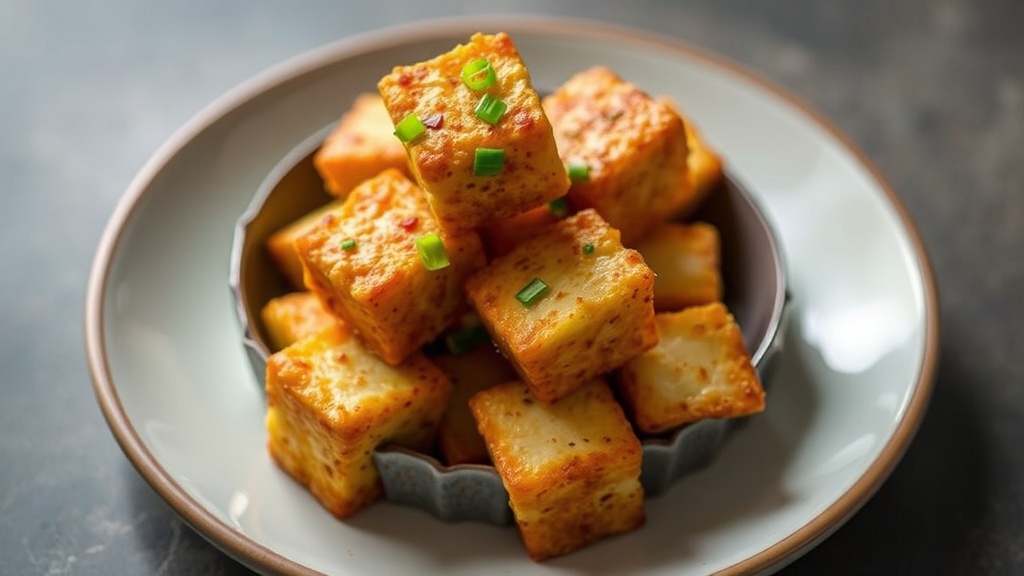
Making Golden Crispy Tofu Without Deep Frying

Nearly 80% of people who attempt to cook tofu at home complain that it turns out either mushy or bland. This happens because most amateur cooks skip the critical moisture-removal phase or rely on heavy oil to create texture. This guide explains how to achieve a golden, crispy exterior using an air fryer or an oven instead of a deep fryer. We'll look at the science of moisture, the best starch ratios, and how to get that satisfying crunch without the heavy saturated fats found in traditional frying.
How Do I Get Crispy Tofu Without Using Oil?
To get crispy tofu without deep frying, you must press the tofu to remove excess water and coat it in a starch before using dry heat. The secret is the combination of high-protein tofu and a fine starch like cornstarch or arrowroot powder. This creates a thin, brittle crust that hardens as the moisture evaporates in the oven or air fryer.
Most people reach for the oil bottle immediately—don't do that. If you use too much oil, the tofu becomes greasy rather than crispy. Instead, we want to rely on the starch to create a structural barrier. If you're looking for more ways to cook without heavy fats, check out my post on flavorful vegan cooking without added oil.
First, grab a block of extra-firm tofu. I personally prefer the Nasoya Extra Firm Tofu because it holds its shape beautifully during the pressing process. You can't use silken tofu here; it simply won't work. It lacks the structural integrity required for this method.
The Pressing Phase:
- Slice the block into 1-inch cubes or rectangles.
- Wrap the tofu in a clean kitchen towel or several layers of paper towels.
- Place a heavy object (like a cast-iron skillet or a heavy cookbook) on top.
- Leave it for at least 30 minutes.
The more water you get out now, the better your final texture will be. It's a simple step, but it's where most people fail. If the tofu is still wet, the starch will turn into a gummy paste rather than a crispy shell.
What Is the Best Starch for Tofu Coating?
Cornstarch is the most reliable starch for achieving a classic, crunchy texture in both the oven and the air fryer. While other starches work, cornstarch provides a more consistent, "crunchy" snap that mimics deep-fried textures. If you want a slightly more translucent, thinner crust, arrowroot powder is a decent alternative, but cornstarch is the gold standard for a heavy crunch.
Here is a quick breakdown of how different coatings behave:
| Starch Type | Texture Result | Best Use Case |
|---|---|---|
| Cornstarch | Hard, crispy, and opaque | Air frying or high-heat baking |
| Arrowroot | Light, delicate, and slightly translucent | Quick pan-searing |
| Potato Starch | Very crunchy and thick | Deep-frying or heavy air-frying |
| Rice Flour | Fine and light | Lightly dusting for a subtle crust |
A little tip: don't just dump the starch on the tofu. Put the pressed, cubed tofu in a bowl, add a tiny splash of soy sauce or liquid aminos for flavor, and then sprinkle the starch over it. Shake the bowl until every side is coated in a thin, even layer. If you see clumps, you've used too much. You want a fine dusting, not a batter.
How Long Should I Air Fry Tofu?
Air frying tofu typically takes between 15 to 20 minutes at 400°F (200°C) depending on the size of the pieces. You must shake the basket halfway through the cooking process to ensure even heat distribution and to prevent the pieces from sticking together. If you don't shake the basket, the side touching the bottom will remain soft and unappealing.
I find that the air fryer is much more efficient than a standard oven for this. The rapid air circulation mimics the effect of a deep fryer by stripping away moisture quickly. If you are using a convection oven, you might need to add 5-10 minutes to the total time. It's worth noting that the heat intensity can vary between brands like Ninja or Philips, so keep an eye on it toward the end.
The Air Fryer Method:
- Preheat your air fryer to 400°F.
- Line the basket with parchment paper (optional, but helps with cleanup).
- Spread the coated tofu in a single layer. Do not crowd the basket!
- Cook for 10 minutes, shake the basket, then cook for another 8-10 minutes.
If you notice the edges are browning too fast, drop the temperature to 375°F. This prevents the outside from burning before the inside is heated through. It's a delicate balance. You want a golden hue, not a dark brown crust.
For those who prefer a traditional oven, the process is similar but requires a baking sheet lined with parchment. To get that "fried" feel, I often use a baking sheet with a wire cooling rack on top. This allows the hot air to circulate underneath the tofu, preventing a soggy bottom. This is a technique I've used extensively when sautéing with water and vegetable stock to keep things light.
Once the tofu reaches that golden-brown color, take it out immediately. If you leave it in the heat too long, it will become incredibly hard and unpalatable—almost like a crouton. You want a texture that is crispy on the outside but still slightly tender on the inside.
To add depth to your tofu, I recommend tossing the crispy cubes in a sauce right before serving. Avoid tossing them too early, or the moisture from the sauce will ruin the crunch you worked so hard to create. A simple mix of soy sauce, toasted sesame oil, and a bit of maple syrup works wonders. If you want to get more advanced with your flavors, you might want to look into building deep flavor with plant-based umami.
The goal is to create a texture that satisfies the craving for something fried without the heavy caloric load. It's a much more sustainable way to enjoy plant-based proteins daily. Whether you're making a tofu stir-fry or a protein-packed salad topper, this method works every single time.
Steps
- 1
Press the Tofu to Remove Moisture
- 2
Coat with Cornstarch or Arrowroot
- 3
Pan-Sear with a Non-Stick Surface
- 4
Add Aromatics at the Very End