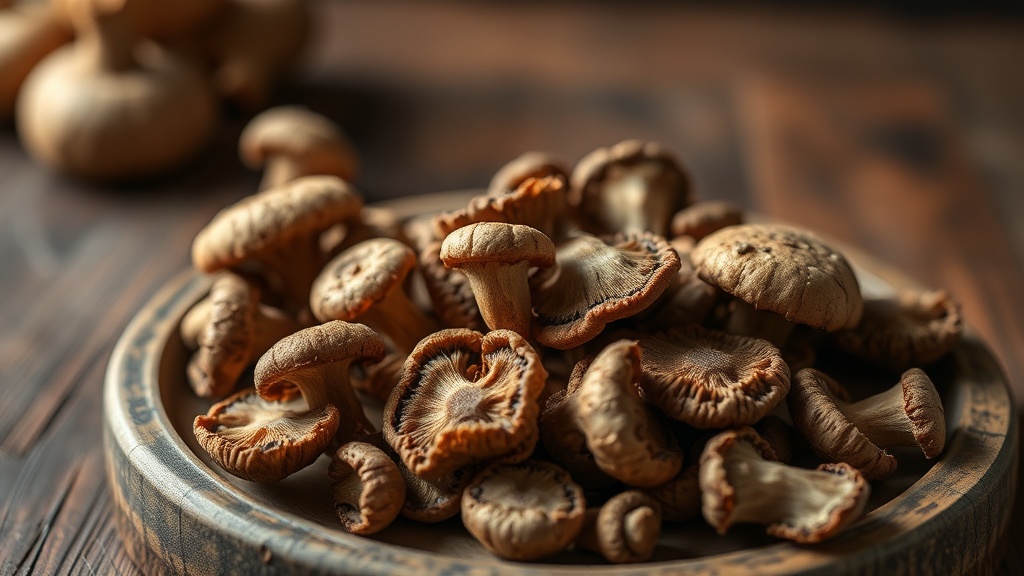
Getting the Best Texture from Dried Mushrooms

Why do dried mushrooms feel tough or rubbery?
Have you ever pulled a piece of rehydrated dried mushroom out of your soup and found it to be unpleasantly chewy or even leathery? It's a common frustration for plant-based cooks. While dried mushrooms provide a massive punch of savory flavor, the way they are rehydrated often dictates whether they become a tender, delicious component of a meal or a texture-ruining mistake. This post covers the mechanics of rehydration, the different types of mushrooms you'll encounter, and the specific steps to ensure every bite is tender and flavorful.
The fundamental issue lies in the cell structure. When a mushroom dries, it loses its water content, but its cellular walls remain. If you don't treat them correctly during the soaking process, those walls can remain stiff. To get that perfect, melt-in-your-mouth quality, you need to consider temperature, liquid choice, and timing. It's not just about making them soft; it's about making them flavorful from the inside out.
Before we get into the methods, let's look at the most common varieties you'll find in the specialty aisle. Each requires a slightly different approach to reach its full potential.
- Dried Porcini (Boletus edulis): These are the gold standard for deep, earthy flavors. They can be quite tough if not soaked properly.
- Dried Shiitake: Very common in Asian cuisine, these offer a meaty texture and a savory profile.
- Dried Porcini/Wild Mushrooms: Often found in European cooking, these provide a more delicate, forest-floor aroma.
- Dried Wood Ear (Mushrooms): These are more about texture than intense flavor—they are crunchy and gelatinous rather than earthy.
Which liquid works best for soaking mushrooms?
Most people default to plain water, but that's a missed opportunity. If you use water, you're just cleaning the mushroom. If you use a flavored liquid, you're seasoning it. For many recipes, a warm vegetable stock is a better choice. However, if you're using the mushrooms for a specific dish, like a risotto or a savory pasta, you might want to match the liquid to the final flavor profile.
If you're looking for nutritional guidance on how fungi contribute to a plant-based diet, the Healthline guide to mushrooms offers some great context on their profiles. For the actual cooking process, we're focusing on texture and flavor infusion. Using a warm liquid—not boiling, but roughly 140°F to 160°F—helps soften the fibers more efficiently than cold water. This is because heat helps break down the chitinous cell walls found in many fungi.
One common mistake is discarding the soaking liquid. This liquid is liquid gold! It's packed with the essence of the mushroom. Instead of pouring it down the drain, strain it through a fine-mesh sieve or a coffee filter to remove any grit or sand, and then use it as the base for your sauce, soup, or braise. This ensures you aren't losing the depth of flavor you just worked so hard to extract.
How long should you soak dried mushrooms?
Timing is everything. If you rush it, you'll end up with a mushroom that's still woody in the center. If you leave it too long, it might become mushy and lose its structural integrity. A general rule of thumb is to allow at least 20 to 30 minutes for standard dried mushrooms, but for thicker varieties like large dried porcini, you might need up to two hours.
If you're in a hurry, you can use the heat-assisted method. Bring your liquid to a simmer, pour it over the mushrooms in a heat-proof bowl, and cover it with plastic wrap or a lid. This creates a micro-environment that accelerates the softening process. A table below outlines the typical soaking times for different mushroom types:
| Mushroom Type | Recommended Liquid | Soaking Time | Texture Goal |
|---|---|---|---|
| Dried Porcini | Warm Vegetable Stock | 30-45 Minutes | Tender & Silky |
| Dried Shiitake | Warm Water or Soy-Infused Liquid | 20-30 Minutes | Meaty & Chewy |
| Wood Ear | Room Temperature Water | 15-20 Minutes | Crunchy & Gelatinous |
| Dried Morel | Warm Water | 20 Minutes | Soft & Earthy |
After soaking, don't forget the most important step: the squeeze. Once the mushrooms have reached the desired softness, remove them from the liquid and gently squeeze them between your hands or a paper towel. This removes excess liquid so they can better absorb the flavors of your cooking fats or sauces later. If you skip this, the mushrooms might dilute your sauce or make it taste watery.
To get the most out of your mushrooms, consider the way you cook them after the soak. A quick sauté in olive oil with a bit of garlic or shallot can create a beautiful crust. This not only adds texture but also locks in the flavors you've just worked so hard to extract. For more information on general food safety and handling of dried goods, you can check the USDA Food Safety and Inspection Service website to ensure your pantry staples are handled with care.
One final tip: always check your dried mushrooms for any grit before you start. Even high-quality brands can occasionally have bits of dirt or sand trapped in the crevices. A quick rinse under a fine-mesh strainer under running water can help, but the soaking process itself is where the real magic happens. Once you master this, you'll find that dried mushrooms are a much more powerful tool in your kitchen than you previously thought.